Annual Report 2025–26
Foreword by Jeni Tennison
Welcome to our fourth annual report! Here, you can learn more about what we’ve been up to, and the impact we’ve had over the past 12 months.
Our work to enable communities to have a powerful say in decisions about data and AI has continued to span local, national and global scales; from theory to practice; and covered both public voice and civil society power. A major focus for our work this year has been on worker power, AI in the public sector, and the intersection between the two, with a particular focus on education.
We ran a Design Lab in collaboration with the Department for Education (DfE) in July 2025, which led to the “Have Your Say” project in Autumn 2025. This was a distributed dialogue with over 1000 students across 23 settings about the use of generative AI in education that shaped the DfE’s updated Generative AI product safety standards as well as school-level AI policies. At the same time, we ran an eight-month-long action-learning programme for education unions in partnership with the Trades Union Congress (TUC), helping nine unions to develop a joint statement calling for educator voice in AI and EdTech.
We also continued to engage constructively with teams across the UK public sector, running monthly community-of-practice sessions to connect public-sector practitioners; supporting the development of the Data and AI Ethics Framework; facilitating engagement between the Cabinet Office, DSIT and civil society organisations around digital ID; and providing individual support and advice to civil servants aiming to embed more participatory practices into their projects.
At an international level, we worked with ParticipationAI on a set of principles for public participation in AI Procurement, launched at the Open Government Partnership Summit in partnership with the Open Contracting Partnership and Posterity Global. We have also supported ISWE to develop a fundraising plan for a Global Citizens’ Assembly on AI and kicked-off a campaign for a Citizens Track on AI Governance
Finally, through our Design Labs, Fellowships, presentations, social media, and conference we have connected new audiences with existing expertise in democratic and participatory decision making around data and AI. The Data and AI Civil Society Network we initiated has grown to over 140 participants with new subgroups emerging for key topics such as digital ID. We are very pleased to have been able to co-convene a second Participatory AI Research and Practice Symposium this year alongside the India AI Impact Summit.
As always, I am immensely grateful to our team, alumni, associates, fellows, partners, collaborators and funders for all their work to advance our vision of communities having a powerful say in decisions about data and AI.
If you want to learn more about our plans for next year, do take a look at our Strategic Roadmap 2026-27.

Our vision
We want communities to have a powerful say in decisions about data and AI so that it is used to create a just, equitable and sustainable world.
Our mission
We campaign to put community at the centre of data narratives, practices and policies by advocating for collective and open data governance.
We have three main strategic goals arising from our theory of change.
- Change data narratives: we develop compelling narratives of collective data governance, placing stories in the media and other key venues that influence communities and decision makers.
- Change governance practices: we surface and share examples of collective and participatory governance, convene a community of practitioners who lead and support collective data governance activities, and work alongside diverse communities to help define how data governance should work for them.
- Change public policies: we provide evidence-based public policy recommendations and language to create an environment for collective and participatory data governance.
These goals are enabled by a strong community and an effective organisation.
Narrative
We develop compelling narratives of collective data governance, placing stories in the media and other key venues that influence communities and decision makers.
Our aim in 2025-26 was to see the adoption of narratives about the collective impact of data and AI, and the collective action that’s needed to counter and hold to account government power, as exercised through data and AI. In particular, we wanted to see influential campaigners and think tanks include recommendations for collective action and/or public participation in their research, white papers and campaigns.
Shaping debates
We contributed to Demos’ ‘A Declaration on Digital Rights: Embedding human rights in a new deal for the digital age’, which included a call for meaningful public participation in technology and AI governance as one of its key recommendations. We also published, with the Bennett School of Public Policy, a policy briefing on ‘The National Data Library and public benefit’ which examined how to satisfy public expectations about sharing data with commercial organisations through returning value to the public. While we weren’t cited, the Tony Blair Institute report ‘What the UK Thinks About AI: Building Public Trust to Accelerate Adoption’ echoed our arguments about the need to understand and respond to public concerns with AI in order to support thoughtful, confident and enthusiastic adoption of AI.
Following the success of our 2025 unconference, on 6 March 2026 we held a full day conference in Manchester focusing on ‘Power and participation in public sector tech’. The day kicked off with a rousing keynote from Steph Wright. We had a mix of speakers, facilitated table discussions and panel conversations, and over 70 participants from central and local governments, large and small charities and civil society groups, technologists, academics, and some members of the public. We balanced a range of perspectives and encouraged the audience to share their own views and lessons. A strong theme through the day of issues around participation - and the conversations held throughout the day - being of “human connection” rather than “tech and AI”.
Today really stretched my brain (in a good way) and I’ve encountered a number of provocations and challenges to consider. I feel empowered to challenge AI deployment, especially where there has been no guidance, or consultation with workers or the public.
— Post session feedback from a conference attendee
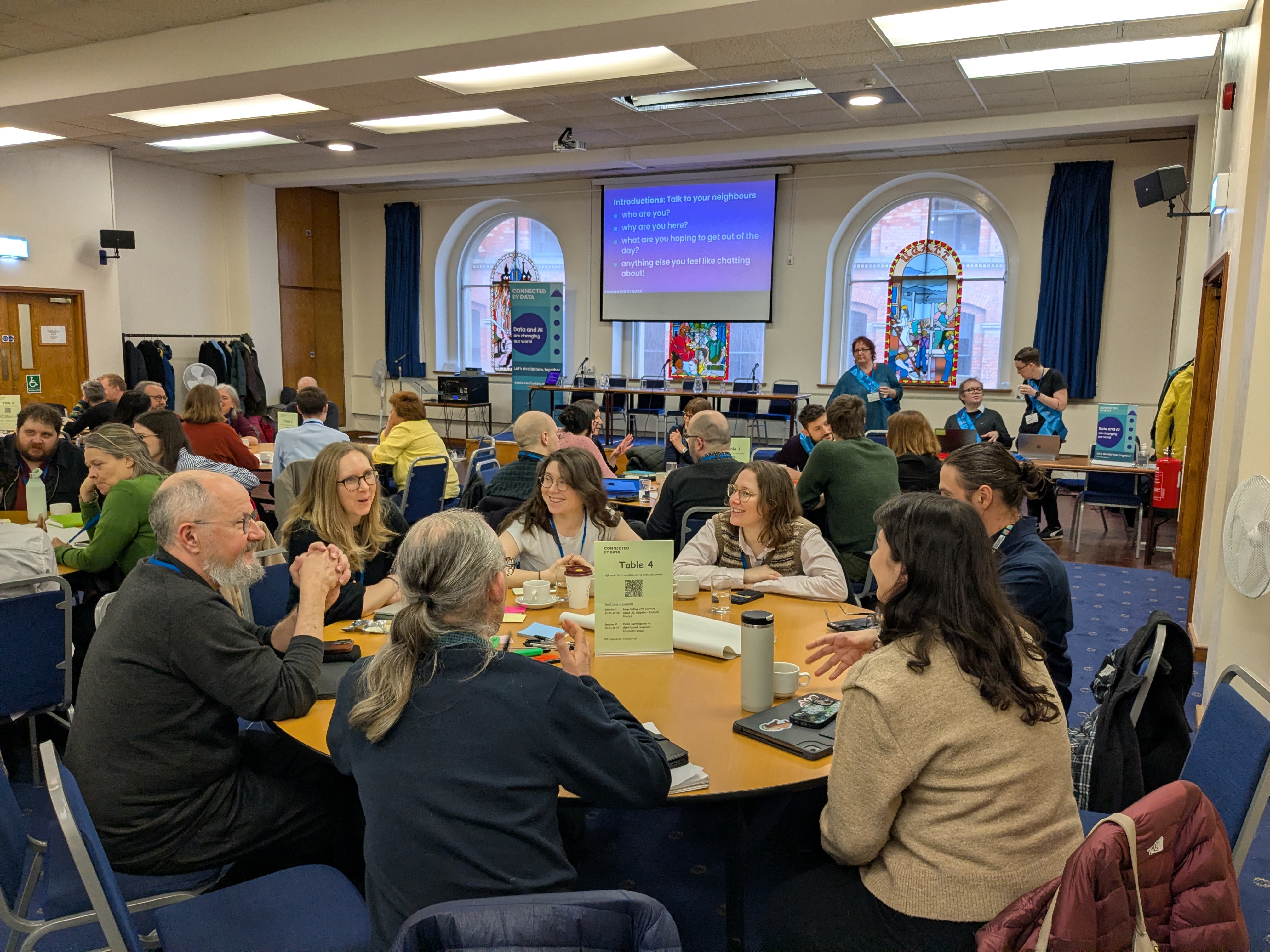
Connected by Data conference in March 2026
Following the announcement of government skill drive on AI that emphasised economic impacts to the exclusion of impacts on community, we coordinated an open letter calling for greater focus of investment and action on scaling and sustaining comprehensive critical AI literacy programmes for all citizens, attracting over 70 signatories, and supporting conversations between an informal coalition of advocates for critical AI literacy. While the letter received a response from Feryal Clark MP, the then Parliamentary Under Secretary of State at the Department for Science, Innovation & Technology, the launch of the AI Skills Hub in early 2026, without involvement of community groups, triggered a follow-up open letter from over 100 signatories, currently awaiting reply. The experience highlighted the need for stronger advocacy on public-interest AI capacity building, and has laid the groundwork for future collaboration between academics and practitioners seeking to support this.
Telling our own story
In 2025-26 we maintained our public profile. We were cited in:
| Date | Title | Publication |
|---|---|---|
| May 2025 | The UK government thinks AI can do two-thirds of the most junior civil servants’ work | Politico (article) |
| May 2025 | Protecting Workers in the Age of AI | CWU live (vodcast) |
| July 2025 | AI skills are about more than a workplace technology | The Herald (article) |
| July 2025 | Global case studies of social dialogue on AI and algorithmic management | International Labour Organization (report) |
| September 2025 | The Guardian view on AI and jobs: the tech revolution should be for the many not the few | The Guardian (article) |
| November 2025 | From AI Literacy to Advocacy : Margaret Colling | The Silver lAIning (podcast) |
| December 2025 | Using AI for your Christmas shopping could backfire. Here’s why | Big Issue (article) |
| January 2026 | From bubbles to ‘SlopTok’: Why 2026 could see both the highs and lows of artificial intelligence | Big Issue (op-ed) |
| January 2026 | AI in education | LBC News London (interview) |
The politics and practicalities of AI are fluid right now. Workers, especially when organised in unions, are an essential countervailing power to the perspectives and practices of technology companies, employers and the government alike. That process of contestation is essential for fair and effective technology at work, and in wider society.
— Adam Cantwell-Corn (he/him), Head of Campaigns and Policy

We continued to participate in others’ workshops and spoke at a range of conferences, including:
- attending the JUSTICE workshop on AI in policing
- keynoting at the UK Census User Conference
- being on a panel at the Public Law and Technology Conference
- keynoting at the Evaluation Conference 2025
- speaking on the IfG panel The Trump challenge
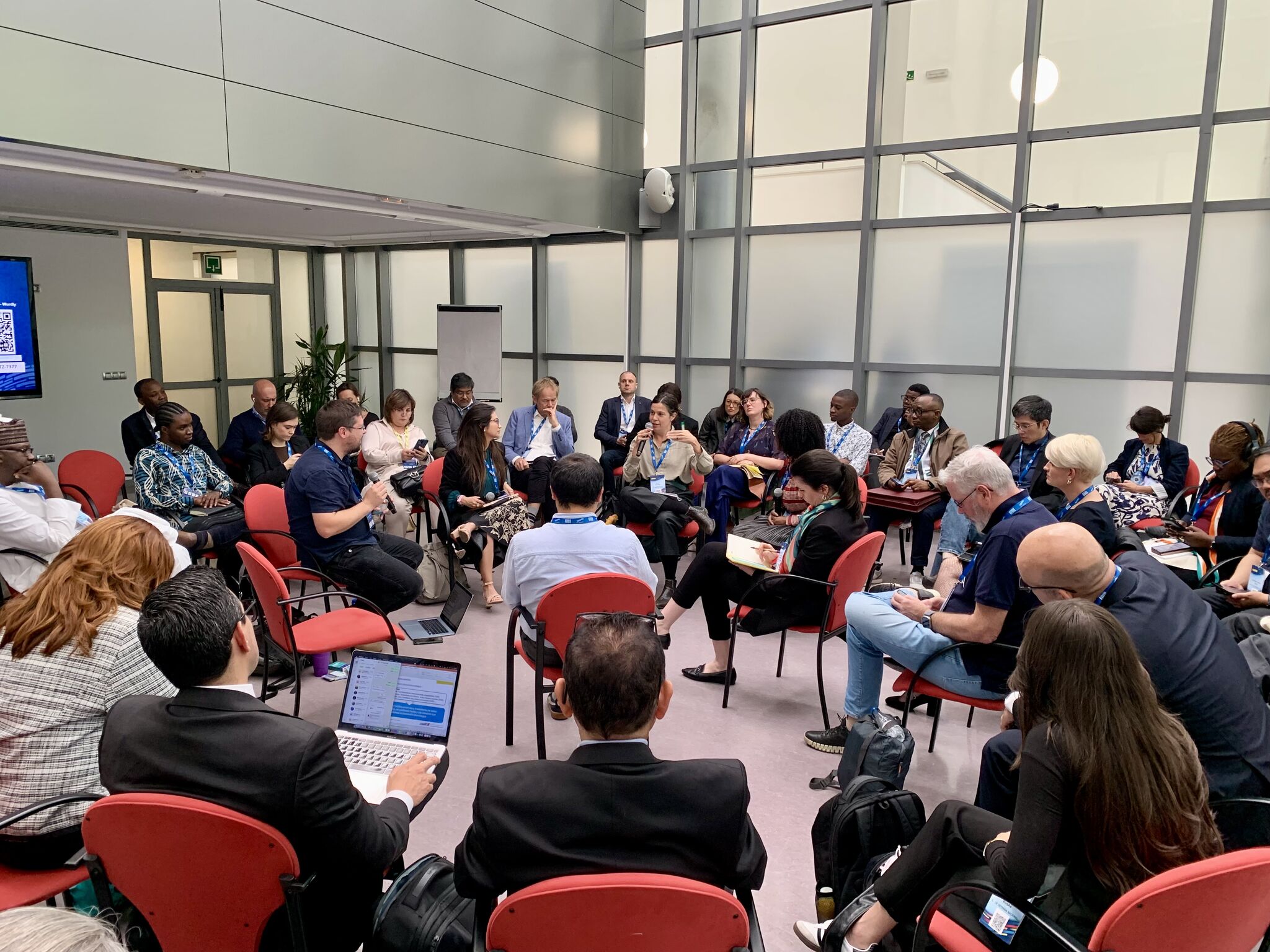
Open Government Partnership ‘Fishbowl’ in August 2025 (Credit: CGC)
Practice
We surface and share examples of collective and participatory governance, convene communities of practitioners who lead and support collective data governance activities, and work alongside diverse communities to help define how data governance should work for them.
Our aim in 2025-26 was to support the embedding of practical guidance on involving the public in data and AI within the public sector. As key measures of success, we wanted to identify and support another organisation to provide high quality union-facing capacity building and action-focused programmes; and to see practical guidance on involving the public in data and AI embedded within at least the Office for Statistics Regulation and the National Data Library.
Public inputs to data and AI governance are ever more vital: from decisions about how data is collected by housing associations, to shaping national investments in AI, or setting global frameworks for applications of AI in education. We’ve continued to explore new methods, and to see how experiments from past years are now influencing emerging practice.
— Tim Davies (he/him), Research and Practice Director

This year, we saw the fruition of the Design Lab we ran in February 2025 with the Office of Statistics Regulation, looking at user engagement and public involvement in statistics production. That work led to a toolkit for statistics producers being published as part of the update to the Code of Practice for Statistics in Autumn 2025.
Over the summer, we worked with Knowledge Industries for Peabody Housing to support resident engagement around a new organisational data strategy, covering services to over 220,000 residents. Through engagement with Peabody’s Resident Led Panel, attending drop-in sessions, facilitating focus group discussions, and providing support to the resident engagement team to talk about data governance issues, we were able to ensure resident voices were heard during data strategy development.
We continued our advisory work with the Communication Workers’ Union (CWU) and transitioned them from full support to leading their own programme. As a result of our input they ran several workshops on Al, iterating on the material we helped co-produce. They also ran an Al Action week in March 2026 and several Al motions are going to their General Conference which will help with a more unified CWU position on Al policy.
Before discussing AI itself, CbD took the time to understand CWU, our ongoing organising objectives and our overall needs.
At CWU we are very encouraged by the progress that has been made in raising AI awareness in workplaces, increasing union reps’ understanding of the issue and the levels of involvement from our members. Working with CbD was an educational, productive and enjoyable experience for us all.
— Lesley-Anne Ure, Recruitment and Organising Lead CWU T&FS
AI in education
The use of AI in education has been a strong theme for us this year, and we’ve come at it from two angles: educator voice, and student voice.
Educator voice
With funding from the Ford Foundation, we ran an eight-month-long action-learning programme for education unions in partnership with the Trades Union Congress (TUC) and undertook ongoing evaluation of this process as a proof of concept. Given the diverse and uncertain impacts of AI in education and the need for collaboration and solidarity between workers in the sector, this work required a cross union effort. We recruited 18 participants from 9 unions representing teachers and lecturers; school and college leadership; teaching assistants; administrative staff; and educational psychologists: UNISON, Unite, UCU, NEU, NASUWT, NAHT, GMB, EIS, and AEP.
Participants were national officers responsible for supporting workers with industrial relations issues as well as policy officers, responsible for developing and advocating the union’s positions on policy. From September 2025, every month participants met online or in person to engage a core concept in the context of AI and education, and then worked to actively plot actions and next steps, together or independently. Across seven sessions, we engaged in a range of organisational, industrial and policy issues and helped the unions to develop a joint statement calling for educator voice in AI and EdTech.
Connected by Data’s expertise and knowledge were instrumental in ensuring that there was deep exploration of complex issues around the development of AI as a technology and the way it is deployed in education.
Their approach also meant that there was a clear political and practical focus on seeking to identify common interests and develop meaningful strategies to increase educator power in decision-making about AI and education at all levels.
— Daniel Stone, bargaining support specialist, National Education Union

Student voice
Our work on student voice started with a Design Lab held in collaboration with the Department for Education (DfE) in July 2025 (a record of the outputs of that lab are openly available) with the goal of starting the process of embedding deliberation about the adoption of AI at the level of schools and colleges.
This Design Lab with the DfE led to the “Have Your Say” project in Autumn 2025, part subsidised by DfE and in collaboration with Policy Lab. In this project, we developed a “Workshop in a Box” for teachers to deliberate with their students about the use of generative AI in education. Over 1000 students participated, across 23 settings. They deliberated, voted on statements and generated creative work describing their perspectives. Alongside this, Connected by Data fellow Dr Claire Bessant, and associate Anna Beckett secured a small amount of funding to run an evaluation of the deliberation, which found that student voice reached a wide audience through this work. We ran a recorded webinar on this project and its evaluation in April 2026. This distributed deliberative engagement has proved an extremely useful proof point for the design of these kinds of activities, and is informing advocacy for citizen’s voice to be embedded in the UN Global Dialogue on AI.
The results of this deliberation directly shaped the updated Generative AI product safety standards published by DfE in January 2026. These standards were launched at the Generative AI in Education Summit held on 19th January 2026, where the Secretary of State mentioned the work in her speech; a video we made of children engaging in this deliberation was shown to the international audience; and Jeni spoke on the initial panel.
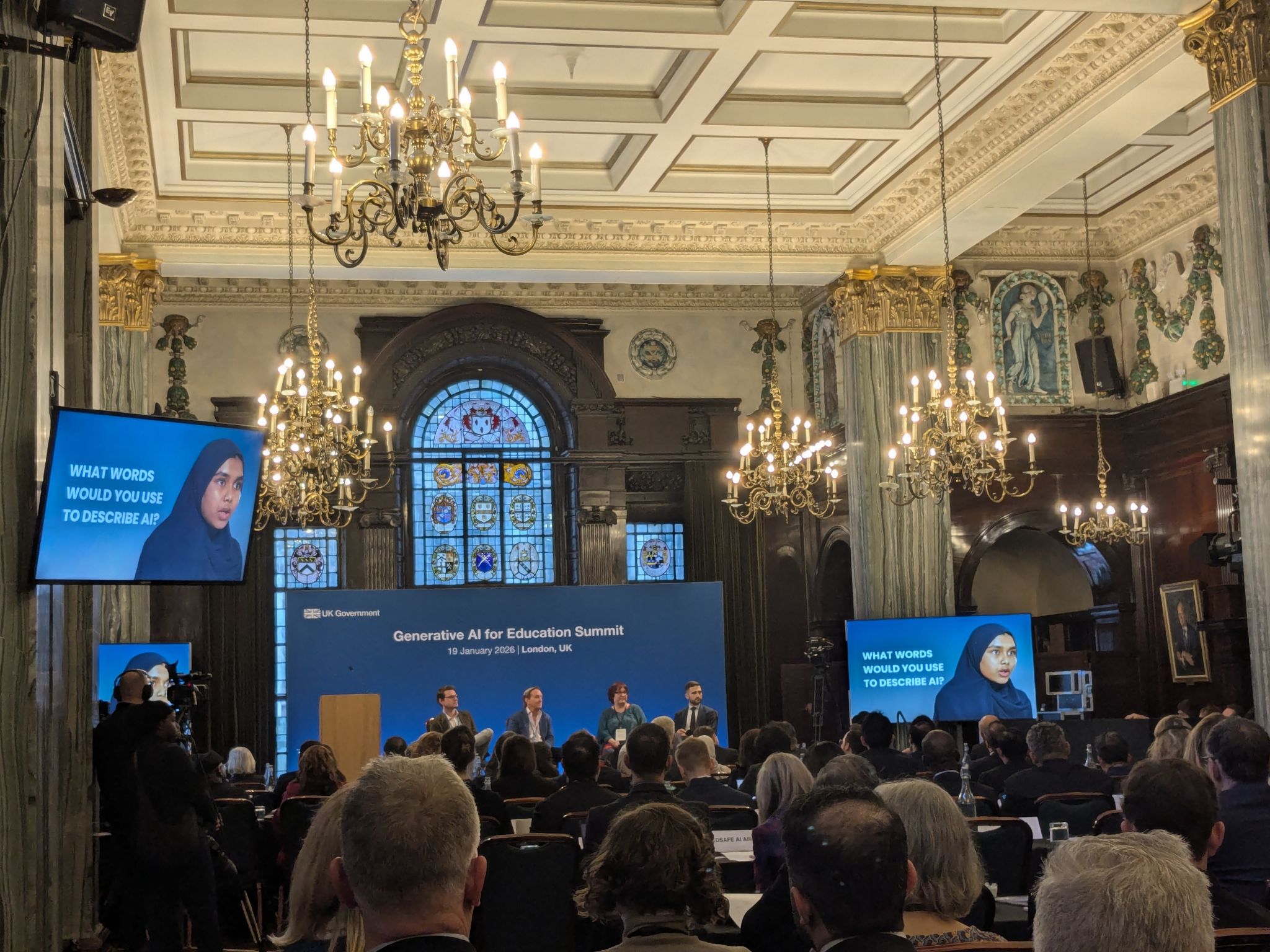
Jeni on a panel at the Generative AI for Education Summit in January 2026
Connected by Data partnered with DfE to deliver an inclusive youth participation project to feed into the UK’s Generative AI for Education Summit in January 2026, grounded in children’s rights and established best practice in youth engagement. They enabled meaningful engagement with over 1,000 children and young people, whose views directly informed the development of new national safety standards for generative AI in education.
— Fay Skevington, Head of AI Alignment for Education, Department for Education

At our conference in March 2026, Emma Darcy, the Director of Technology for Learning at Denbigh High School, whose pupils appeared in the video, reflected that the deliberation had directly affected the way that the school used AI, and that she had witnessed the impact of the product safety standards on the EdTech exhibitors at Bett UK, an EdTech exhibition and conference held immediately after the Summit.
Working with the team at Connected by Data over the past year has been an incredibly positive and rewarding experience. Through their collaborative and thoughtful approach, they created meaningful opportunities for our students at Denbigh High School to contribute to important national and international conversations about AI in education.
What stood out most was the team’s genuine commitment to student voice and their understanding of the realities of working within a busy school environment. They were consistently supportive, flexible and approachable, ensuring that the work was manageable for staff while remaining impactful for students. Their calm and encouraging approach quickly put our learners at ease, giving them the confidence to speak openly and eloquently about complex issues affecting their education and future.
The Connected by Data team has helped amplify student voices in our school in meaningful and lasting ways. Their values-driven, inclusive and collaborative approach has reinforced the importance of listening to young people and ensuring they are active participants in conversations about the future of AI in education.
— Emma Darcy, Director of Technology for Learning, Denbigh High School

Our working relationship with the DfE continued into 2026. In the first three months of the year, we completed a project to understand student and stakeholder perspectives on the monitoring of engagement with generative AI tools in schools.
Ripples from the People’s Panel on AI
In November 2023, we organised the People’s Panel on AI. That work inspired the Public Voices in AI team to commission a PVAI Advisory Group that we ran – using public voice to support the design and development of their research work packages. The People’s Panel on AI included a recommendation of “A continued national conversation on AI”. That message has been repeated throughout the public voice activities that we’ve been involved in and this has led, at the end of 2025-26 to the launch of a national “Let’s Talk AI” campaign”. People who had previously never been involved in conversations about AI, selected through a sortition process in 2023, remain highly engaged in the national campaign. A BBC news article, featuring one such voice, promoted the launch.
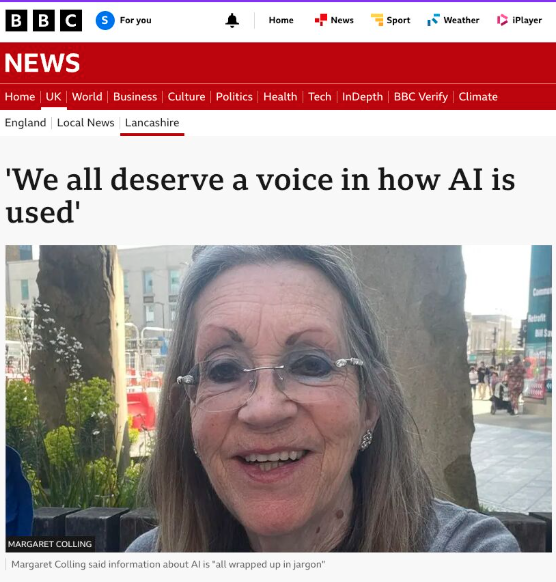
Margaret, a member of the Connected by Data People’s Panel on AI featured as part of the “Let’s Talk AI” launch in early April 2026
“Let’s Talk AI - the first people-first AI literacy campaign - has launched and is seen as a success by policy-makers, academics from different disciplines, science communication and people working in advocacy for public engagement in AI.
You can draw a clear line of impact from Let’s Talk AI back through a series of Connected By Data’s engagements to the very first People’s Panel on AI event that was held alongside the first AI summit, hosted by the UK in 2023.”
— Susan Oman, Senior Lecturer in Data, AI & Society, University of Sheffield

Policy
We provide evidence-based public policy recommendations, build countervailing power in civil society and demonstrate collective data and AI governance in practice.
Our aim in 2025-26 was to embed standards and policies for meaningful and effective involvement of workers, civil society and workers in the design, development and deployment of data, digital and AI systems in the public sector. Our goal was for Government Digital Service (GDS) to make investments in public, worker and civil society involvement in their work.
Working with central government
In July we held a Design Lab in collaboration with GDS; a record of the outputs of that lab are openly available. We have focused on supporting and galvanising members of the GDS team and wider public sector who want to experiment with and lead these changes. This has included:
- presentations at the Government data and artificial intelligence ethics community and at DataConnect25
- providing feedback on the draft Data and AI Ethics Framework, leading to an emphasis on public, civil society and worker participation throughout
- individual support and advice to user research leads aiming to embed more participatory practices into their projects, who continue to be engaged through the community of practice and with our conferences
- internal activity within the public sector, such as the creation of a Slack channel for practitioners to take forward this work
Jeni will continue this work in her new role as Chair of the GDS Responsible AI Advisory Panel, which Adam was also selected for as a representative of the TUC.
We facilitated engagement between the Cabinet Office, DSIT, and civil society organisations around digital ID, supporting two ministerial roundtables held on digital inclusion and civil liberties in December 2025, and the team shaping further deliberative consultation on digital ID. Jeni now sits on the Oversight Board for the People’s Panel deliberation on digital ID, due to be held between May and July 2026.
Working with local government
We held an engagement Design Lab held in collaboration with the Data Justice Lab at the University of Cardiff in June 2025. This built on the Liverpool Civic Data Co-operatives Community of Practice series, and brought together 25 participants from organisations including the Local Government Association, UK Data Service, Future Generations Commissioner, Local authorities, Academic Institutions and Civil Society organisations. Discussions covered methods for citizen engagement; getting buy-in for participatory AI projects; participatory procurement and oversight; principles and charters for citizen-oriented data/AI governance and AI literacy for citizens and staff. Through a second day of action-planning, a group led by the LGA worked on outline funding proposals for a place-based initiative on AI governance (taken to DSIT for funding, but not currently moving forward), and a second group worked on shaping principles for public participation in the procurement of AI, which informed the launch of the P4AI Principles at the Open Government Partnership Summit in Vitoria-Gasteiz in October, and creation of a public-procurement remix of the Good Governance Game.
Supporting public sector public involvement practitioners
We have developed the evidence base for public, worker and civil society engagement in data and AI by the public sector by creating a number of case studies highlighting both ways in which the public sector is engaging with communities to shape data and AI, and what can go wrong when it doesn’t:
- Public sector public engagement on data and AI
- Statistics and public engagement
- What happens when public data is shared with the wrong people?
- What happens when people don’t have a say over official statistics?
- What happens when workers are ignored during digital transformation?
- How can public bodies engage with the public during tech procurement?
- How can we ensure public data is shared in the public interest?
We have used monthly community-of-practice sessions to connect practitioners from the public sector with others in civil society, academia and the private sector to share their experiences, disseminate insights and provide a space to discuss challenges. In all cases, we have been able to share notes and some video from the sessions with those signed up to the community of practice – in several cases, we have made video of presentations more widely available (for example, from Thinks on their public engagement on AI in policing and the Mohn Centre for Children’s Health and Wellbeing on their ‘data detectives’ game for young people and health data, from the Royal Academy of Engineering on their people’s AI stewardship summits and on evaluating Liverpool’s citizen assembly, and from Beam on evaluating their AI transcription tool in social care). At the final meeting Tim shared reflections from our experience of participatory practice over the last four years.
It’s been a privilege to hear from people - through the community of practice - about how they’ve been engaging the public on data and AI.
Across all the different projects and approaches, it’s obvious how that engagement has provided valuable insight, built trust and ultimately led to better policies and outcomes.
— Gavin Freeguard, Policy associate

In May 2025 we also organised a roundtable with the patients charity National Voices to explore how patient voice can shape health tech innovation.
Working internationally
In 2025-26, we were funded by ISWE to provide strategic advice and support to develop a fundraising plan for the Global Citizens’ Assembly on AI. This resulted in the kick-off meeting of a campaign for a Citizens Track on AI Governance.
Over 2025 we also worked with ParticipationAI on a set of principles for public participation in AI Procurement, launched at the Open Government Partnership Summit in Vitoria-Gasteiz, Spain, in partnership with the Open Contracting Partnership and Posterity Global. We participated in a panel session at Mozilla Festival in Barcelona organised by Connected by Data Fellow Kiito Shilongo, titled ‘Margins No More - Civil Society as a Force in Global Tech Politics’
We’ve continued to participate in the informal international data governance working group convened by the Global Partnership on Sustainable Development Data, coordinating on messaging with colleagues around the world.
Community
Since our incorporation in 2022 we have amassed 1,500 followers on Bluesky; over 300 on Mastodon; almost 3,000 followers on LinkedIn; and have over 200 members on our Discord server. We intentionally moved away from X (formerly Twitter) in 2025, and no longer post there, but have over 1,500 followers. There are 560 people signed up to the Data and AI public engagement community of practice and our Connected by Data newsletter is received by 1,300+ subscribers.
Participatory AI Research and Practice Symposium (PAIRS)
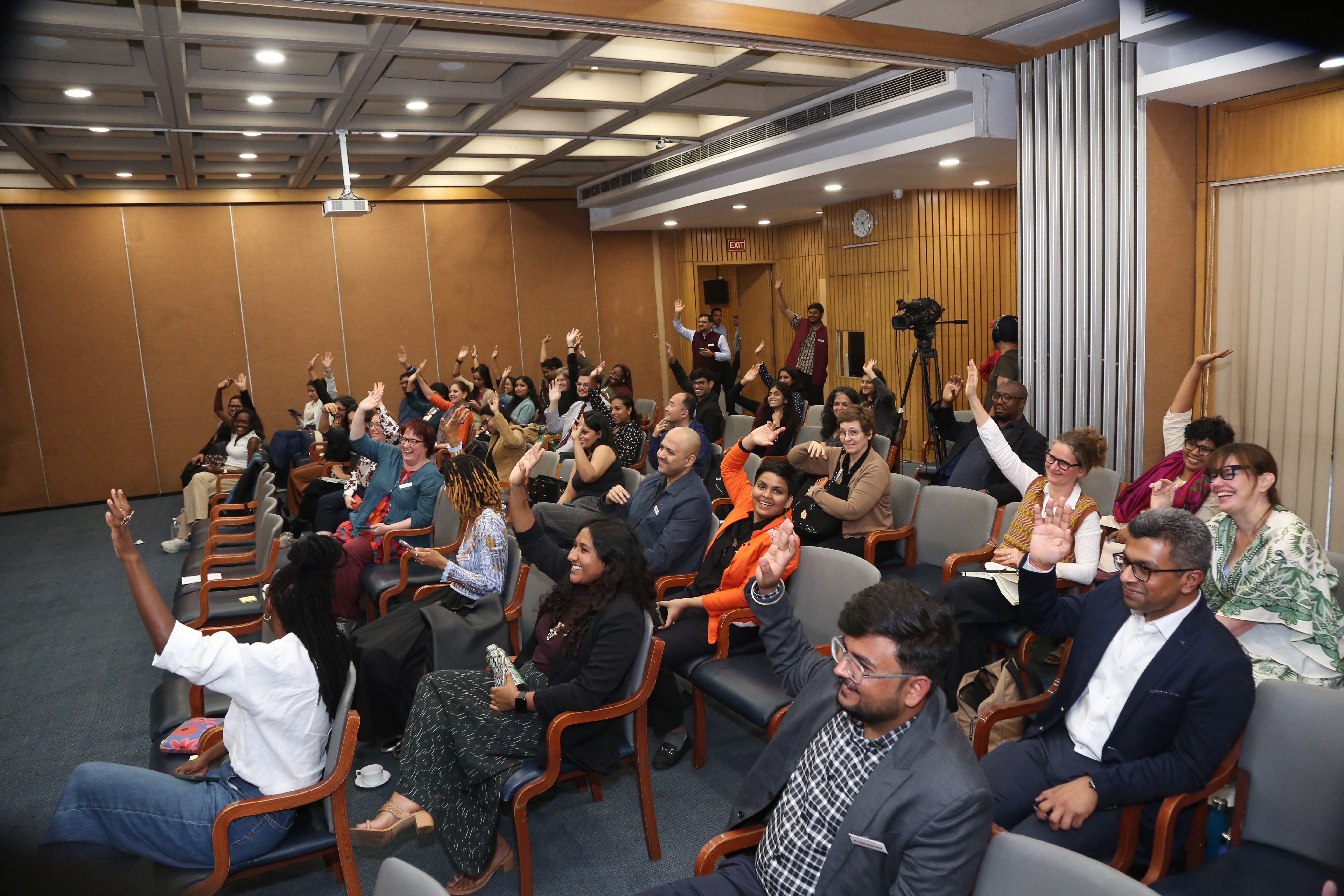
PAIRS attendees in New Delhi, February 2026
Following the success of PAIRS in Paris in 2024-25, the second edition of the Participatory AI Research & Practice Symposium (PAIRS) took place online and in New Delhi on 17th and 18th February 2026, bringing together insights from over 90 studies and projects exploring how public participation can shape the future of AI development, governance and resistance. Through our official AI Impact Summit Pre-event and two days of PAIRS presentations, we directly engaged over 250 participants from across the world. Through participants’ social media posts, session recordings and online engagement we are reaching thousands more.
27 people completed an evaluation form the online or in-person events. For our three outcome statements, the following percentage of responses either agreed or strongly agreed:
- I’ve made new connections that will impact on my work: 77%
- I discovered new ideas that I can apply in my practice: 92%
- I encountered ideas that challenge me to rethink some of my work: 92%
— Post session feedback from PAIRS attendees
As we explored in our op-ed in the Indian Deccan Herald just before the AI Summit, there is an urgent need to articulate a richer conceptualisation of inclusive and democratised AI: moving beyond a focus on democracy as access, to democracy as citizen voice, choice and control.
At a time when participatory practice in AI is more important than ever, it’s great to see PAIRS come together this year, and grow from strength to strength. It is particularly valuable for practitioners who actively consider how to ensure AI satisfies the public interest to share their experiences, learn from each other and advocate together.
— Vidushi Marda, Director of Ecosystem Building at the AI Collaborative

In New Delhi, there was a notable contrast between PAIRS and the main India Impact Summit. The selection of sessions through an open call and peer-review, the intentional creation of time for connection and discussion, and the thematic focus of PAIRS filled a critical gap in programming for the week. It offered space to build community, and interrogate practice, as well as to share ideas and future visions. The Chairs’ report can be read online.
During the India AI Impact Summit, PAIRS provided the only participatory, community led space to discuss issues that didn’t find place in the main agenda. Not only did a diverse group of researchers from across the globe get a chance to present their work, but they also built and fostered the community around participatory AI. PAIRS is a space that needs to be cherished and grown.
— Astha Kapoor, Aapti Institute

Data and AI Civil Society Network
The Data and AI Civil Society Network has continued with monthly ‘core group’ meetings, though we have only been able to provide light administrative support for it. A few subgroups, including the Welfare & Tech Working Group and Digital ID Coalition, have spun out from the main Network. The core group meets online monthly, and the British Computing Society arranged an in-person meeting in January 2026. Individual relationships have been built, job moves facilitated, and bilateral collaboration has taken place in the Signal Group we established, which now has over 140 members and continues to be highly active, with multiple daily posts. In that space, a broad range of individuals share intelligence, peer support, connect to write reports, organise joint letters, and co-host events.
AI was an entirely new policy area for UNISON and I had to pick up a vast and fast-moving subject from scratch. The CSO Network was vital for the first years of my job: a genuine source of support, learning and community. Through it I got to grips with the policy landscape, met people across AI civil society, heard a range of views, and was kept abreast of key developments, announcements and deadlines. It has been an invaluable resource - for me personally, and for UNISON.
— Kate Jones, AI policy officer, UNISON

When we started off Pull The Plug, we were very new to the world of tech campaigning and had very few connections to existing tech civil society organisations. Connected By Data has been incredibly helpful to connect us up with a large number of organisations and help us navigate the complicated lay of the political land. Their insights into organising past deliberative processes around AI and tech more widely has also been invaluable.
— Frieda Lürken, Pull The Plug
Cultivating changemakers
Our global fellowship programme continued, with two additional Fellows bringing fresh perspectives to the group. Fellows are supported and mentored in a bespoke approach with a fortnightly collective online gathering, with connections brokered with our wider community. This year at least two Fellows achieved funding for work through their connection with us.













My time as a Fellow provided the support I needed to translate my academic experience into policy impact. With Connected by Data’s support, I was introduced to a network of professionals and experts advocating for a better digital future. These connections have been invaluable in my current position at the3million.
— Kaelynn Narita, Fellow
My involvement with Connected by Data over several years has meant regular enriching conversations with fellow researchers and policy specialists, which have helped me find new methodologies and routes to societal and policy impact. In particular, support and mentorship from the core team helped me secure a Knowledge Exchange fellowship for a project which focuses on motivations, enablers and barriers to public participation in technology/data decisions in the areas of justice and education.
— Judith Townend, Fellow
Organisation
In the last twelve months four core staff hours have varied depending on organisational needs, funding, and external opportunities, but we have all worked part time.
Adam Cantwell-Corn has secured a permanent job with the Trades Union Congress as their Policy Lead for Technology and Artificial Intelligence (where he has been working three days/week since October). Emily Macaulay is also working as a freelance Operations Manager for two social impact organisations. We have continued to work closely with Gavin Freeguard on ‘giving communities a powerful say in public sector data and AI’ and he led our community of practice.
We’ve really seen the benefit this year of funders that allow you to take opportunities, through supporting a programme approach rather than tying down a specific, narrow, project. It has also been great to pass on a significant amount of our grant income to support others working in collaboration with – or aligned to – us.
— Emily Macaulay (she/her), Head of Delivery and Operations

Openness
We aim to work in the open. Our strategic roadmap for 2025-26 reflects on what we have learned over the past year and sets our intentions for the one upcoming. We continue to share our own resources and amplify those of others. As we start to think about the end of Connected by Data we are focussing some energy on how we best share what we’ve learned; ensure our resources remain accessible; and motivate others to take on what we have started.
Diversity, equity and inclusion
Our work is founded on an awareness of power, privilege and pluralism inspired by feminism, intersectionality, and anti-colonialism. We continue, as individuals and collectively, to challenge ourselves to improve our understanding and implementation of inclusive practice.
Our conference was a key event this year where we sought to be inclusive in our work, intentional in our decisions and explicit about what we were doing. This included: a photo-heavy welcome document; creating a spaces for prayer and breastfeeding and/or decompression/quiet; printing documents only when requested in an alternative font/colour; covering care costs for members of the public to attend. Over 50% of the cost of our conference (~£3.5k) was spent supporting people to be able to attend. We recognise that to ensure global representation in participatory practices (or discussion about those practices) some communities need financial support to attend. As part of the PAIRS hosting of an in-person symposium in India in early 2026 we facilitated the payment of travel / expenses / per diem bursaries, totalling £21k.
We continued to seek to minimise the carbon costs of all our events, taking steps including but not limited to offering vegan meals by default, and encouraging train travel where possible.
Learning
We are committed to continuously learning about what works and what doesn’t, and how to improve our impact. During 2024-25 we learned:
Including community voices in the process can make a difference. Through our work with residents associations, students, educators and workers, we’ve seen repeatedly that people have strong opinions and preferences around data and AI. Hearing these is incredibly useful for decision makers – it can shape products, policy responses and engagement strategies. What’s more, the act of asking itself improves relationships and attitudes.
Specificity is key. Both deliberations and capacity building programmes are most effective when they focus on an issue or tool relevant to the audience rather than abstract or high-level discussions. However, even while focusing on specific issues, people’s attitudes will always be influenced by the wider context – whether these are worries about AI (such as environmental concerns, fears of job losses, or the dominance of US big tech) or broader (such as different beliefs about effective pedagogy or the role of the state in healthcare delivery) – as well as their own values. Recognising these different starting points means acknowledging that making decisions about data and AI is a political process that requires contestation and negotiation; focusing on the specifics helps to identify unified and nuanced approaches even when people’s values differ.
Resistance is significant. Media narratives, attitudes surveys, and deliberative engagement processes we have run highlight that while there are undoubtedly AI enthusiasts, a significant proportion of people object to AI, to the extent that they will avoid it and even shun people who use it. These people are not laggards in the technology adoption lifecycle, or surveillance-avoiding privacy activists, they are people who find pervasive and obligatory AI enraging and/or are using their consumer power to take a political stand against AI.
Civil society coordination requires infrastructure. Civil society around data and AI spans a very wide range of topics and focuses, from the role of open data and open source; through privacy, civil liberties and digital rights, equality and justice, industrial policy, children’s rights, literacy and skills, and environmental impacts; to sector-focused concerns around the role of data and AI in health, education, welfare, or policing. As a result, effective alliances coalesce around distinct topics, often in response to government action. The Data and AI Civil Society Network is best understood as infrastructure that enables these alliances to form by enabling information sharing, and by building and maintaining trusted relationships between organisations and people. However, like any infrastructure, it needs active administration and maintenance to function effectively.
You make your own luck. Our most impactful work has come about not through long term planning but through pursuing opportunities that have presented themselves to us. However, these have never arisen out of the blue. They are the result of strong networks and relationships, built from previous joint activities. They are the result of openness, of sharing our materials and reflections widely. Our ability to act on opportunities has also been founded in flexible funding, imagination, and agility in how we manage our time and resources. The visible impactful successes can seem lucky – about being in the right place at the right time – but they are the tip of an iceberg of foundational activities which may have seemed fruitless at the time, but that put us there.
We’ve taken these lessons into our plans for next year, which you can learn more about in our Strategic Roadmap 2025-26.
Governance
We are a non-profit company limited by guarantee and with charitable objectives (including an asset lock) written into our Articles of Association. We are a CAF International Validated Organization and have certified US Equivalency Determination. Our Governing Board is chaired by Karin Christiansen (Chair) with Non-Executive Directors Louise Crow; Karien Bezuidenhout; and Hera Hussain. Their Terms of Reference and meeting minutes are published on our website.
Funders
Thanks to our funders for their generous support during this year.

Finances
Our full financial statements have been filed with Companies House and are summarised below.
| 2025/26 | |
|---|---|
| ,000 (k) | |
| Income | 430 |
| Unrestricted grants | 0 |
| Restricted grants | 336 |
| Sales | 94 |
| Costs | 437 |
| Staff costs | 353 |
| Other costs | 85 |
| Corporation tax | -2 |
| Capital and reserves | 16 |
| Accrued 2025/26 income | 270 |